Myths about varicose veins
Do you know everything you need to know about varicose veins?
Varicose veins are more than a cosmetic concern; they affect 30% of the Spanish population, particularly women. Summer can aggravate the problem: as well as concerns about showing the legs, heat can worsen symptoms. Discover the myths and facts behind this common health condition.
1. A HEALTHY LIFESTYLE PREVENTS VARICOSE VEINS. FALSE
Although maintaining a healthy diet, exercising, avoiding alcohol and smoking, and remaining active may help delay their appearance, genetic predisposition and the use of hormonal contraception can play an important role despite a healthy lifestyle.
2. THEY ARE ONLY A COSMETIC PROBLEM. FALSE
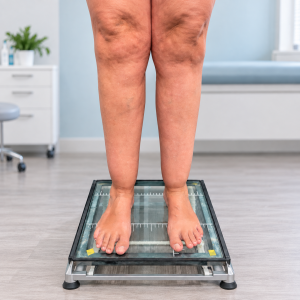
More advanced varicose veins that develop over time can cause more than cosmetic concerns when showing the legs in summer. They may lead to vascular complications such as superficial thrombophlebitis, venous thrombosis, ulcers or pigmentation.
Legs by the swimming pool

3. THEY ONLY OCCUR IN THE CALVES. FALSE
They may also appear elsewhere, such as the thighs or the arch of the foot.
4. THERE ARE MORE VARICOSE VEINS THAN YOU CAN SEE. FALSE
Varicose veins are dilated superficial veins. Deep veins are surrounded by muscles and are not the visible varicose veins we see beneath the skin.
5. ALL VARICOSE VEINS CAN BE REMOVED AT A BEAUTY CLINIC. FALSE
For appropriate, professional varicose vein treatment, it is advisable to consult a specialist vascular service. Cosmetic clinics should be limited to the treatment of small spider veins with more superficial, low-risk procedures.
6. ONLY SEE A DOCTOR WHEN THEY BECOME PAINFUL. FALSE
It is best not to wait until this point, but to see a vascular specialist as soon as we notice the first signs or symptoms, whether visible changes or pain. Early treatment may help reduce discomfort in the longer term.
7. THEY CAN BE TREATED ALL YEAR ROUND. TRUE
Treatment can indeed be performed throughout the year, although it may be preferable to avoid summer because the bandages or compression stockings that may need to be worn, whether following surgery or as conservative treatment, can be uncomfortable in hot summer weather.
Misconceptions about varicose veins

8. THEY CAN ONLY BE REMOVED IN AN OPERATING THEATRE. FALSE
Saphenous vein stripping is not the only option. Less invasive techniques can achieve similar results, including microfoam sclerotherapy and vascular laser treatment. The preferred technique depends on each patient's individual case.
9. AFTER TREATMENT, YOU WALK DIFFERENTLY. FALSE
Blood flow through the superficial venous system (of which the treated veins form only a small proportion) accounts for just 5% of total venous return, while the remaining 95% passes through the deep venous system. Treatment therefore does not affect the way you walk.
10. NEW TECHNIQUES PREVENT RECURRENCE. TRUE AND FALSE
Although many treated varicose veins do not recur, recurrent veins may still develop and require further treatment. Complementary treatments such as microfoam sclerotherapy and laser treatment may be recommended in these cases.
11. MY PROBLEM IS “INTERNAL VARICOSE VEINS”
Varicose vein disease is described by the CEAP classification, which does not distinguish between internal and external varicose veins. Instead, it involves the superficial venous system losing its ability to prevent blood from flowing backwards when standing because of valvular dysfunction, leading to varicose dilatation.
Another condition sometimes described as internal varicose veins is dysfunction of the calf muscle pump, which may lead to venous congestion, oedema and heaviness.
In conclusion, the term is imprecise and not a recognised diagnosis. It may be used to give patients an apparent explanation for heaviness, fatigue, pain and functional limitation without identifying their actual cause.

12. IS SEAWATER REALLY A MIRACLE CURE FOR VARICOSE VEINS?
Popular tradition seems to attribute magical healing properties to seawater, which is rich in mineral salts. It may benefit certain skin conditions, but this has no direct relevance to varicose veins or spider veins. Like many myths, it has a distant basis in reality, but presenting seawater as a reliable remedy for varicose veins is incorrect.
13. VARICOSE VEINS COME BACK AFTER TREATMENT
After appropriate treatment, including accurate diagnosis, identification of reflux points, a suitable strategy and follow-up, treated varicose veins have a low risk of recurring from the same cause. Their source should have been addressed either surgically or through ablation techniques (laser, radiofrequency ablation, foam sclerotherapy). However, patients can develop new varicose veins from different sources over the years, as previously healthy veins become varicose.
14. ASPIRIN HELPS ELIMINATE VARICOSE VEINS
Aspirin (acetylsalicylic acid) may relieve discomfort as an analgesic, but it does not correct venous valve dysfunction, which is the underlying cause of varicose veins.
15. RECOVERY AFTER VARICOSE VEIN SURGERY IS LONG AND PAINFUL
Not necessarily. Modern, minimally invasive endovenous ablation treatments (radiofrequency ablation, mechanochemical ablation and laser ablation) are generally well tolerated and allow a rapid return to normal life.
Even conventional saphenous vein stripping can now be performed without hospital admission, with patients returning home on the same day and receiving outpatient follow-up. Many can return to work after 7–10 days.
Where the chosen option is sclerotherapy with foam, time off work is generally not required and patients can continue their usual daily activities.