Important aspects when starting compression therapy

Compression stockings
Compression stockings are a cornerstone of treatment for disorders of venous or lymphatic return. They improve symptoms by promoting drainage while reducing excessive leakage of fluid from blood vessels into the subcutaneous tissues.
Graduated compression means that the applied pressure decreases progressively from the ankle towards the calf and thigh, encouraging upward fluid flow. Compression stockings are therefore available in classes 1, 2 and 3, with higher classes providing stronger compression.
They can also be worn by people without impairment of venous or lymphatic return who, because of their daily activities, need to help prevent future complications and relieve heaviness or fatigue associated with prolonged standing or sitting (hairdressers, teachers, surgeons, police officers, office workers, etc.).
Each condition requires appropriate compression hosiery, and every patient's anatomy is unique, requiring a garment that fits correctly. It is also important to emphasise that stockings have a limited useful life. The main considerations are:
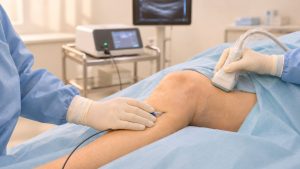
- Appropriate compression: the values expressed in mmHg (millimetres of mercury) indicate the pressure applied to the leg. The compression level should be appropriate to the severity of the venous or lymphatic condition and determined during the consultation on the basis of ultrasound findings and the condition of the leg.
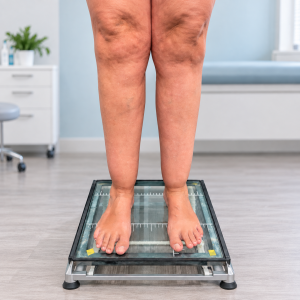
- Correct size: this is determined by measuring the circumference around the leg about 3 finger-widths below the knee and at the ankle, then comparing the measurements in centimetres with the relevant sizing chart. Each manufacturer has its own measurements, so the same nominal size does not necessarily fit across brands. Considerable weight changes that alter these measurements may also require a different size.
- Useful lifespan of the stocking: compression stockings are made of elastic compression materials whose fibres lose their properties over time. In most cases, after 4–5 months the prescribed compression is no longer guaranteed; wearing a worn-out stocking all day may therefore provide inadequate compression.