Varicose veins · Treatments
Laser, radiofrequency, foam, adhesive… When you start looking for information about varicose vein treatment, it is easy to end up with more questions than you started with. How do these techniques differ? Do they achieve the same result? Is the newest technique also the most suitable one for you?
Advances in varicose vein treatment have given us more options, allowing treatment to be tailored more closely to each individual. But making the right choice still starts with understanding what is causing your varicose veins, which symptoms they cause and what you want to improve.
In this article, I explain how each treatment works, what the European and US guidelines recommend and which recent advances are worth knowing about, without losing sight of their limitations.
In this article
- Why varicose veins develop
- The role of duplex ultrasound
- How each treatment works
- Preserving the saphenous vein
- High-intensity focused ultrasound (HIFU)
- Compression stockings and lifestyle
- When a venous ulcer is present
- Comparing the options
- Recovery and follow-up
- Frequently asked questions
- Book an assessment
- Medical references
Before considering treatment: why do varicose veins develop?
Veins carry blood from the legs back to the heart. To help it flow upwards, they contain small valves that work like one-way doors. When some of these valves no longer close properly, blood flows backwards and the pressure inside the vein rises. This is known as venous reflux.1
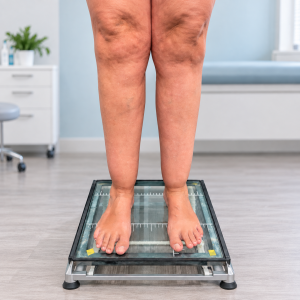
Over time, some veins become dilated and visible beneath the skin. They may be associated with heaviness, itching, pain or swelling. However, varicose veins do not explain every leg symptom, and not all visible veins need the same treatment.
The saphenous vein is one of the main veins of the superficial venous system. Smaller veins branch off it. Sometimes both the saphenous vein and some of its tributaries need treatment; in other cases, only certain varicose veins need to be treated. Looking solely at the veins visible beneath the skin may therefore fail to reveal the underlying cause.2
Duplex ultrasound: choosing treatment on an informed basis
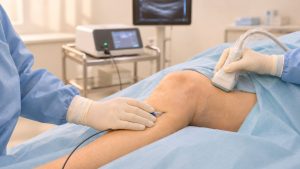
The vascular duplex ultrasound scan allows us to see the veins and check the direction of blood flow. It does not use ionising radiation. It helps identify reflux, assess the deep veins and map the veins that may need treatment.1,2
Two people whose varicose veins look similar may need different treatments. The course and diameter of the vein, its proximity to the skin or a nerve, previous treatments and your general health all matter.
The starting point should be a thorough understanding of your circulation, rather than choosing a particular device.
The main references for this review are the 2022 European ESVS guideline, the 2022–2023 US SVS/AVF/AVLS recommendations and the 2025 SCAI guideline. Studies published in 2026 provide further information on specific techniques; they do not, in themselves, replace these recommendations.
Which techniques are used and how do they work?
Many modern treatments close an incompetent superficial vein instead of removing it. Closing the vein in this way is called ablation. Blood continues to return to the heart through the veins that are functioning properly; before treatment, we check that this is possible.14
Radiofrequency ablation: closing the vein with controlled heat
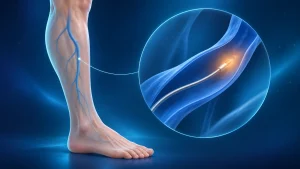
A catheter, a thin, flexible tube, is inserted into the vein through a small puncture. Under ultrasound guidance, it is positioned within the section of vein to be treated, and controlled heat is applied. The vein wall contracts, closing the vein.4
A solution containing local anaesthetic is injected around the vein. As well as reducing discomfort, it helps protect the surrounding tissues from heat. In our practice, when indicated, the procedure is performed in theatre, with an anaesthetist, and is usually carried out as a day-case procedure.
Radiofrequency ablation is an established technique for selected cases of saphenous vein reflux. Its suitability depends on whether the course of the vein allows the catheter to be introduced and treatment to be performed safely. You can read more in our guide to radiofrequency ablation for varicose veins.

Endovenous laser ablation: a fibre that works inside the vein
The procedure is similar to radiofrequency ablation, but the heat is generated by a laser fibre inserted into the vein. It is also performed under ultrasound guidance and usually requires local anaesthetic around the vein. This is different from the laser applied to the skin to treat small visible veins.14
Laser fibres and equipment have evolved to deliver energy more evenly. Recent research includes comparisons between different wavelengths, or characteristics of the light used.
A 2026 trial involving 66 patients compared lasers with wavelengths of 1940 and 1470 nanometres. No significant differences were found in the main ultrasound findings in the treated vein after one year. This technological advance warrants further study; it does not in itself demonstrate that newer equipment produces better outcomes for everyone.5

Foam sclerotherapy: a medicine that closes the varicose vein
A medicine is injected to act on the inner lining of the vein, causing it to close gradually. It can be administered as a liquid or as foam. Foam helps the medicine come into contact with the vein wall and, when treating veins that are not readily visible externally, it is injected under ultrasound guidance.3,6
It is an option for selected varicose tributaries, recurrent varicose veins and some truncal veins. Very small veins can also be treated with sclerotherapy, using a preparation suited to their size.
There is no vein removal or use of heat. Several sessions may be needed, and local inflammation or skin pigmentation can occur. In a main saphenous trunk, conventional foam has a higher risk of recanalisation (the vein reopening) than thermal ablation. Its convenience does not make it the first choice for every varicose vein.2,3
You can find a more detailed explanation in our guide to sclerotherapy.

Medical adhesive: sealing the vein without heat
A catheter delivers small amounts of an adhesive specifically designed for medical use. When the walls of the vein are brought together, the adhesive bonds them. No heat is used, and this technique usually avoids the multiple injections of local anaesthetic around the vein required for thermal ablation.3,7
Recent developments in 2026 include the VenaSeal Spectrum trials. In comparison with thermal treatments, no differences were detected in the main outcomes assessed for satisfaction and treatment of reflux. This does not establish the long-term superiority of the adhesive.7
There are particular considerations: material remains inside the vein, and inflammatory or hypersensitivity reactions may occur. Appropriate patient selection remains important.

Mechanochemical ablation: combining mechanical action and a medicine
The name sounds complicated, but the principle is simple. A catheter acts on the inner lining of the vein while delivering a medicine to promote closure. In some devices, a small rotating tip provides the mechanical action.6,8
No heat is used, and injections of local anaesthetic along the vein are generally unnecessary. It can be an alternative for selected patients. However, European guidelines indicate that vein closure may be less durable than with thermal techniques. It is important to discuss both comfort during treatment and longer-term outcomes.2

Miniphlebectomy: removing protruding varicose tributaries
Selected superficial varicose veins are removed through small incisions in the skin using very fine instruments and local anaesthetic. This can be combined with closure of a saphenous vein or used as the main treatment in selected cases.6,8
The distinction is useful: the catheter treats the vein from within, while miniphlebectomy removes selected tributaries. These are not necessarily competing treatments. They may complement one another during the same procedure or at different times. Bruising and small marks may take time to settle afterwards.

Conventional surgery: still an option
In some cases, a section of the saphenous vein is removed surgically using a technique known as stripping. This can be an alternative when catheter-based options are unsuitable or unavailable. It usually requires incisions and a longer recovery than endovenous procedures.15
A technique that has been used for longer may still be appropriate. What matters is explaining why it is recommended in your case and what alternatives are available.

Can varicose veins be treated while preserving the saphenous vein?
For selected patients, vein-preserving strategies may be considered. Rather than leaving the condition untreated, these techniques target the particular sites or tributaries that require treatment.
The CHIVA approach aims to redistribute blood flow by treating specific sites, guided by a detailed assessment of the circulation. Another option is to remove selected varicose tributaries first and then assess the response of the saphenous vein. These are different approaches that require careful patient selection.2,6
The SAPTAP trial studied the second approach. At one year, quality of life among the patients studied was comparable to that with initial combined treatment, but approximately one in four required subsequent treatment of the saphenous vein. Preserving the vein may be reasonable in some cases, but it cannot be promised for everyone.9
Focused ultrasound: treating the vein from outside the skin
High-intensity focused ultrasound, known as HIFU, focuses energy at a specific point in the vein to generate heat and close it. Unlike laser or radiofrequency ablation, the energy comes from a device outside the body, so no catheter is inserted into the vein.10,11
It is one of the most notable areas of innovation. On 4 November 2026, the US Food and Drug Administration (FDA) granted De Novo authorisation to the Sonovein system for thermal venous coagulation.10
However, regulatory authorisation does not demonstrate that a technique is better than all the alternatives. Published studies offer promising results, but there is still less comparative experience and long-term follow-up than with established techniques. A 2026 study involving 80 patients was observational, not a randomised trial.11
It can also cause discomfort or thermal injury. Being catheter-free does not mean being heat-free or risk-free. Its availability and suitability must be assessed at each centre. It is an option to consider in units with the relevant equipment and specific expertise.

Compression stockings and lifestyle remain part of treatment
Walking, moving your ankles, avoiding prolonged immobility and wearing compression stockings where indicated can help control symptoms. The stockings apply external pressure to promote venous return and reduce swelling. They do not, in themselves, repair damaged valves.14
Compression should be tailored to each individual, particularly if arterial circulation is impaired. The compression level should not be selected solely on the basis of commercial advice.
The US guidelines do not require a mandatory three-month trial of compression stockings before intervention in every patient with symptomatic varicose veins who is eligible for treatment and wishes to proceed. That does not mean stockings have no value: they should simply not become an automatic reason to delay treatment.3

What changes when a venous leg ulcer develops?
A venous ulcer requires a specific treatment plan: wound care, compression when safe, and assessment of the circulation. It is not merely a cosmetic concern.12
The EVRA trial showed that early treatment of superficial venous reflux alongside compression can accelerate healing compared with deferred intervention. This evidence predates 2026 and continues to inform clinical practice. Not all leg ulcers are venous: their cause must first be established.12,13
So, what is the best treatment for my varicose veins?
The best treatment is the one that addresses the underlying problem and suits your anatomy and needs. To compare the options, it helps to understand what each technique does:
| Treatment | How it works, in brief |
|---|---|
| Radiofrequency ablation | Closes the vein from within using controlled heat. |
| Endovenous laser ablation | Uses a laser fibre to generate heat within the vein. |
| Foam sclerotherapy | A medicine acts on the vein lining to promote closure. |
| Medical adhesive | Bonds the vein walls together without using heat. |
| Mechanochemical ablation | Combines mechanical action inside the vein with a medicine. |
| Miniphlebectomy | Removes superficial varicose tributaries through small incisions. |
| Conventional surgery | Removes a section of vein where this is indicated. |
| HIFU | Focuses energy from outside the body to generate heat inside the vein. |
| Compression | Helps control symptoms and oedema; does not itself eliminate reflux. |
Alongside vein closure, we need to consider how you feel, how much your daily activity improves, potential adverse effects and whether further treatment is needed. New technology may offer specific advantages without being the best choice for everyone.
Recovery and follow-up: what you need to know
Many treatments allow you to walk and return home on the same day. However, recovery varies with the extent of your varicose veins, the technique used and whether other tributaries have also been treated.4,8
Before the procedure, it is worth discussing the type of anaesthesia, when you can resume your usual activities, whether you will need compression stockings and what follow-up will involve. In some cases, a further ultrasound scan is needed to check the outcome. You can also read our guide to walking after varicose vein surgery.
Bruising, tightness and tenderness may occur. Less common risks include thrombosis and injury to nearby nerves; complications vary according to the technique. No procedure is entirely risk-free.16
Frequently asked questions
Can varicose veins be treated without conventional surgery?
In many cases, yes. Treatments can be carried out through needle punctures or small incisions. Whether they are suitable depends on an assessment of your veins. A less invasive treatment still requires proper assessment and care.
Will closing a vein make my circulation worse?
In suitable patients, treatment targets an incompetent superficial vein in which blood flows backwards abnormally. The other venous pathways are checked beforehand to ensure that they function properly. This is why a duplex ultrasound scan is part of treatment planning.2,3
Can varicose veins recur?
Yes. A treated vein may reopen, or new varicose veins may develop elsewhere over the years. The aim is to improve the current condition and plan follow-up, without promising that further treatment will never be needed.3
Should I choose the newest technique?
Not necessarily. Ask what advantages it offers for your particular vein, what its long-term outcomes are and what alternatives are available. The answer should not depend simply on the name of a device.
A specialist assessment to help you make an informed decision
If varicose veins are causing symptoms or you want to know which options suit you, we can review your symptoms and assess your circulation. The aim is to help you understand what is happening, with a clear explanation of the benefits and limitations of each option.
I see patients at Centro Médico Hostafrancs and at Clínica Mi Tres Torres, in Barcelona. You can choose your preferred centre on the appointment booking page.
Medical references and further reading
1. Society for Vascular Surgery. Patient information on varicose veins.
2. ESVS. European guideline on chronic venous disease, 2022.
3. SVS/AVF/AVLS. US guidelines on varicose veins, part II, 2023.
4. Cambridge University Hospitals. Information on radiofrequency ablation and recovery.
5. Stücker et al. 1940 versus 1470 nm laser: randomised trial, 2026.
6. Hospital Clínic Barcelona. Treatment of varicose veins.
7. Gohel et al. VenaSeal Spectrum trials, 2026.
8. SCAI. Illustrated comparison of treatments for patients, 2025.
9. SAPTAP trial. Isolated phlebectomy versus combined treatment.
10. FDA. Sonovein System, De Novo decision DEN250063, 4 November 2026.
11. Observational study of HIFU in 80 patients, published in 2026.
12. SCAI. Clinical practice guideline on chronic venous disease, 2025.
13. EVRA trial. Early treatment of reflux in venous leg ulceration.
14. NHS. Varicose veins: treatment, lifestyle and compression stockings.
15. NICE. Patient information on treatments for varicose veins.
16. Guy’s and St Thomas’. Treatments and adverse effects.
General medical information. The suitability and availability of each treatment are assessed individually.