Varicose veins and their medical significance
Varicose veins are dilated veins that often appear blue or dark purple. They develop when venous valves weaken, allowing blood to flow backwards and pool in the veins. Varicose veins can affect different parts of the body, but are most common in the legs. Here we look at the different types and their medical significance.
There are three main types: spider veins or telangiectasias, reticular veins and truncal varicose veins. Spider veins are superficial and close to the skin, whereas reticular and truncal varicose veins may lie deeper below it.
Spider veins appear as fine red or bluish lines on the skin and are most common on the legs, feet, face and chest. Reticular veins range from blue to purple and look like larger spider veins. Truncal varicose veins are larger, bulging vessels that appear more prominent than the other types (Figure 1).
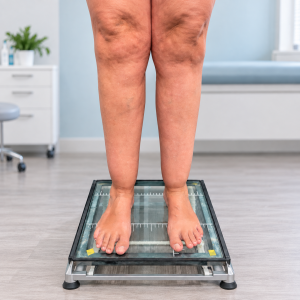
Varicose veins may cause discomfort such as pain, swelling and itching around the affected area. They do not usually cause serious medical problems, but if left untreated for a long time, more serious complications may develop. These include blood clots (superficial thrombophlebitis), limb swelling, pigmentation and changes in the subcutaneous tissues that can eventually lead to ulcers that are very difficult to treat (Figure 2).
It is important to be aware of possible complications of varicose veins and see your vascular specialist if you are concerned. Risk factors such as age, family history, prolonged standing or sitting, lack of physical activity and obesity can increase the likelihood of developing varicose veins. Your vascular specialist may suggest lifestyle changes or specific treatments to reduce risk.
Spider veins
Spider veins, or telangiectasias, are small red, purple or bluish vessels near the skin surface that resemble a spider's web. They are generally a cosmetic concern and most can be treated with laser treatment or sclerotherapy. Laser treatment uses intense pulses of light to close small vessels, whereas sclerotherapy involves injecting a solution into the vessels to make them collapse and gradually disappear.
Spider veins are very common and do not usually require medical attention. However, they may cause symptoms and should be assessed by a vascular specialist if you are concerned. Long-standing lesions, particularly in older people, can become prominent and shiny under very thin skin, forming thin-walled venous blebs that may bleed considerably. In these cases treatment is medically indicated rather than cosmetic, because bleeding is a potentially serious complication (Figure 3).
Reticular veins
Reticular veins are larger than spider veins and are usually blue or purple. They lie deeper under the skin and may cause more discomfort than spider veins, including pain, swelling, burning, tingling and heaviness in the affected area. They may also contribute to changes in the subcutaneous tissues, such as venous eczema and skin discolouration.
This condition lies between a cosmetic concern and a medical problem. Treatment is often recommended if the veins cause physical discomfort or cosmetic concerns. If untreated, they may develop into larger, more prominent varicose veins. The treatment options vary according to the severity of the condition and may include laser treatment, sclerotherapy or microphlebectomy.
Truncal varicose veins
Truncal varicose veins are larger than reticular veins and may be quite conspicuous. These dilated vessels lie deeper beneath the skin and may be tender to touch. As with other types of varicose veins, specialist assessment is important to establish an appropriate treatment plan. In this situation, there is a clear indication for treatment.
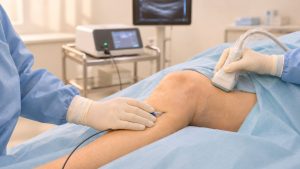
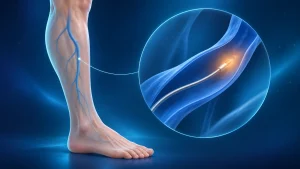
There are several treatment options for truncal varicose veins, depending on the complexity of the case. These include laser treatment, radiofrequency ablation, sclerotherapy and cyanoacrylate glue closure. Each patient should be assessed by a vascular specialist to determine the most appropriate option for their condition (Figure 4).
Varicose veins can be uncomfortable and unsightly. However, with appropriate diagnosis and treatment, they need not become a source of worry or embarrassment. If you are concerned about varicose veins, it is important to speak to your vascular specialist, who can advise you and help you find relief.
Only a specialist in angiology and vascular surgery can advise you appropriately on lifestyle changes or treatments that may be beneficial if you have symptoms associated with varicose veins.