Lipoedema: what it is, why it develops and how it is treated today
Many women spend years wondering why their legs grow disproportionately, are painful to the touch or bruise easily. Some have repeatedly been told that they should lose weight or that it is simply fluid retention.
In certain cases, however, lipoedema may be present. This condition is still poorly understood, raises many questions and continues to be the subject of new research.
It is important to clarify one point at the outset: not all enlarged legs are due to lipoedema, and not everyone with lipoedema has the same symptoms. Diagnosis must be made on an individual basis after an appropriate medical examination.
What is lipoedema?
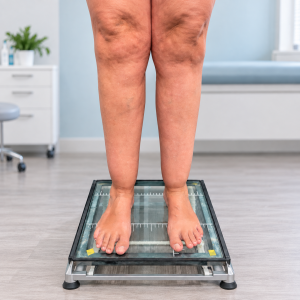
Lipoedema is a chronic disorder of subcutaneous adipose tissue that occurs almost exclusively in women. It causes a disproportionate and generally symmetrical increase in the volume of the legs and, in some people, the arms as well.
Its most distinctive feature is not simply body shape. The tissue is often painful or tender to pressure and may be associated with heaviness, tightness and easy bruising.
The feet are usually spared. As a result, some people develop a distinct cuff of tissue around the ankles while the feet remain a normal size. A similar pattern may affect the arms, with sparing of the hands.
Current guidelines consider that a disproportionate distribution of fat without pain or discomfort should not automatically be diagnosed as lipoedema. In such cases, it may reflect an individual's natural body shape or lipodystrophy.
Which symptoms may suggest lipoedema?
The most common findings are:
- Symmetrical enlargement of both legs.
- Disproportion between the trunk and limbs.
- Spontaneous pain or tenderness when the tissue is touched or pressed.
- A feeling of heaviness, tightness or fatigue in the legs.
- Frequent bruising.
- Worsening discomfort after standing for prolonged periods.
- Feet usually spared.
- Difficulty finding clothes or boots that fit properly.
- Difficulty walking, exercising or carrying out certain activities in more advanced cases.
Not all of these signs need to be present. Some may also occur in other conditions.

Lipoedema, obesity, lymphoedema and venous insufficiency: they are not the same
These conditions can be confused with one another and may even coexist in the same person.
| Feature | Lipoedema | Obesity | Lymphoedema | Venous insufficiency |
|---|---|---|---|---|
| Distribution | Usually symmetrical and disproportionate | More generalised | May be asymmetrical | Variable |
| Feet affected | Usually not | May increase in size | Yes | Ankle swelling may occur |
| Tenderness to pressure | Common | Not characteristic | Variable | Heaviness or venous pain |
| Easy bruising | Common | Not characteristic | Not characteristic | Skin changes may occur |
| Pitting oedema | Usually absent | Uncommon | Common, especially in the early stages | May occur |
| Single diagnostic test | None exists | No | Not always | Duplex ultrasound provides important information |
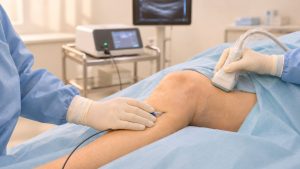
Vascular assessment and, where indicated, a duplex ultrasound scan can identify or rule out associated venous insufficiency. However, a normal ultrasound scan does not in itself confirm lipoedema.
Why does it develop?
The most honest answer is that we do not yet know a single cause.
Research points towards a combination of factors involving adipose tissue, connective tissue, small blood vessels, the lymphatic system, inflammation and pain sensitivity. However, it remains unclear which changes cause the condition and which occur as a consequence.
A degree of familial predisposition is also observed. Some patients describe their mothers, sisters or grandmothers as having similarly shaped legs. This suggests a possible genetic predisposition, although no specific gene has yet been identified that accounts for most cases.
Lipoedema therefore cannot simply be attributed to overeating, lack of exercise or a lack of willpower.
What role do hormones play?
The relationship with hormones is one of the most interesting questions, and one of the least well understood.
Lipoedema often develops or becomes more apparent during periods of hormonal change, particularly:
- Puberty.
- Pregnancy.
- Menopause.
Rare cases have also been reported in men, generally associated with significant hormonal disorders.
These observations suggest that oestrogens and other hormonal mechanisms may influence adipose tissue development. However, a temporal association does not prove that hormones are the direct cause.
We do not currently know why some women develop lipoedema and others do not, and no specific hormonal treatment has been shown to cure it. Contraception or hormone therapy should not be started or stopped solely on suspicion of lipoedema without individual medical assessment.
How is it diagnosed?
Diagnosis is primarily clinical. This means that it is based on:
- The patient's history.
- The distribution of adipose tissue.
- The presence of pain, tenderness, heaviness or bruising.
- Examination of the skin, feet and limbs.
- Exclusion of other causes.
There is currently no blood test, ultrasound scan, MRI scan, genetic test or biomarker that can independently confirm lipoedema. Additional investigations can help rule out venous, lymphatic, endocrine or musculoskeletal conditions, but they do not replace clinical examination.
The absence of a definitive test partly explains the controversy. For many years, some patients went undiagnosed. At the opposite extreme, the increasing use of the term on social media may lead to any disproportion in body shape being interpreted as lipoedema.
Neither ignoring it nor diagnosing it from a photograph alone is an appropriate approach.
The stages of lipoedema
Three stages have traditionally been described according to the appearance of the skin and subcutaneous tissue.
| Stage | Typical features |
|---|---|
| Stage 1 | The skin surface is relatively smooth. The subcutaneous tissue is enlarged and soft, and small nodules may be palpable. |
| Stage 2 | The skin surface becomes irregular, with dimpling or an orange-peel appearance. Nodules are more apparent and fibrosis may increase. |
| Stage 3 | Large deposits, folds or lobules of tissue develop, which may restrict movement and alter the shape of the limb. |
Some older classifications referred to “stage 4” when lymphoedema developed. It is now more appropriate to consider this lipoedema with coexisting lymphoedema, also called lipo-lymphoedema, rather than assuming that all patients will inevitably progress to this stage.
An important clarification about the stages
The stages primarily describe the appearance of the tissue, not the severity of the condition.
A woman with stage 1 lipoedema may experience considerable pain, whereas another with more noticeable physical changes may have little discomfort. Furthermore, it has not been established that all cases inevitably progress from one stage to the next.
Practical assessment pathway
This diagram provides general guidance but does not replace a medical consultation.
How is lipoedema treated today?
There is no single treatment suitable for everyone. The aim is to relieve pain, maintain mobility, improve functional ability and avoid unnecessary interventions.
1. Information and realistic expectations
Understanding the condition is often the first step. Treatment should not focus solely on weight or leg measurements.
It is helpful to identify the symptoms that genuinely affect daily life: pain, heaviness, difficulty walking, limitations at work, difficulty exercising or emotional distress.
2. Physical activity
Regular movement helps maintain muscle strength, joint mobility, venous return and general health.
Activities adapted to each person's abilities are usually recommended, such as:
- Walking.
- Progressive strength training.
- Cycling.
- Swimming or water-based exercise.
- Mobility and stability exercises.
No exercise selectively removes lipoedema tissue. Nevertheless, appropriately chosen activity may relieve discomfort and prevent pain from leading to an increasingly sedentary lifestyle.
3. Compression
Compression stockings or garments may relieve pain, heaviness and tightness. They should be fitted to the shape of the limb and provide the lowest level of compression that is effective and tolerable.
Compression does not remove adipose tissue. Its role is to control symptoms and, where associated oedema is present, help reduce fluid accumulation.
4. Physiotherapy and decongestive therapy
Selected patients may benefit from therapeutic exercise, skin care, compression and other techniques included in decongestive therapy.
Manual lymphatic drainage has not been shown to remove adipose tissue. It may help some people manage pain or associated oedema or lymphoedema, but it should not be presented as a cure or used routinely in every case.
5. Nutrition, weight and metabolic health
Lipoedema and obesity are different conditions, but they may coexist. Where excess weight is present, weight loss can improve mobility, reduce the load on joints and reduce some of the limb volume.
This does not mean that all symptoms disappear with weight loss. Body disproportion or certain symptoms may persist even after substantial weight loss.
There is no “lipoedema diet” proven to cure the condition. A balanced, sustainable eating pattern similar to the Mediterranean diet is a reasonable option. Other strategies, including low-carbohydrate or ketogenic diets, are being studied, but evidence remains limited and does not justify promises of universal results.
6. Medicines and supplements
There is currently no approved medicine that specifically eliminates lipoedema.
Diuretics should not be used routinely to treat it, as the problem is not simply an overall excess of fluid. They may be indicated for another condition that requires them, but that is a different situation.
It is also worth being cautious about supplements, creams or treatments that promise to reduce inflammation or eliminate lipoedema without reliable clinical evidence.
7. Liposuction
Liposuction may be considered in carefully selected patients when pain or functional limitations persist despite appropriate conservative treatment.
This is not conventional cosmetic liposuction. Techniques that minimise trauma to tissues and lymphatic vessels should be used by teams with specific experience.
Published studies report improvements in pain, tenderness, mobility and quality of life. However, much of the evidence comes from observational studies without a comparison group. A recent review of six retrospective studies involving 429 patients reported favourable outcomes, although its authors emphasised the need for more robust research and longer follow-up.
Recommendations are not identical in every country. German guidance considers liposuction a treatment option for selected cases, whereas UK NICE guidance takes a more restrictive position and recommends its use within research protocols because of uncertainty about long-term benefits and risks.
The procedure may improve symptoms, but it should not be presented as a guaranteed cure. Several sessions may be required, there are surgical risks, and some patients continue to need compression, exercise or other care after surgery.
Frequently asked questions
Is lipoedema a form of obesity?
No. They are distinct conditions, although they may coexist. Obesity alone does not explain pain, easy bruising or certain patterns of body fat distribution.
Does weight loss help?
Yes. Where excess weight is present, weight loss can bring significant benefits for health, mobility and the joints. It may also reduce leg volume. However, body disproportion or some discomfort may persist.
Does it always get worse over time?
Not necessarily. Some people remain stable for many years. Progression may be influenced by weight changes, hormonal changes, reduced mobility and other conditions, but inevitable progression has not been demonstrated in every case.
Does it turn into lymphoedema?
Not inevitably. Lipoedema and lymphoedema are different conditions, although they may coexist. In advanced cases, increased tissue volume and other factors may place extra strain on the lymphatic system.
Is it a circulatory condition?
It is not a venous condition, but a patient with lipoedema may also have varicose veins or venous insufficiency. Where symptoms are suggestive, vascular assessment and a duplex ultrasound scan may therefore be important.
Do all patients need surgery?
No. Many people can manage their symptoms through education, physical activity, compression and management of associated factors. Surgery is reserved for specific circumstances and should be considered after assessing benefits, limitations and risks.
When should you seek medical advice?
It is advisable to seek assessment if there is symmetrical disproportion of the limbs accompanied by pain, tenderness, heaviness, frequent bruising or difficulty walking and carrying out everyday activities.
By contrast, sudden swelling of one leg, especially with pain, redness, warmth or difficulty breathing, requires urgent medical assessment. This is not typical of lipoedema and may have other potentially serious causes.
An assessment without prejudice
Lipoedema is a real condition, but research continues to evolve. Important questions remain about its cause, diagnostic criteria and the most effective combination of treatments.
Medical assessment must avoid two errors: attributing all symptoms to body weight or, at the opposite extreme, interpreting every change in the legs as lipoedema.
Listening to the patient's history, carrying out a thorough examination and distinguishing lipoedema from other vascular and lymphatic conditions make it possible to set realistic goals and choose the most appropriate treatment for each individual.
This article provides general information and does not replace individual medical assessment.
Do you need an assessment?
If you have symptoms, questions about your diagnosis or would like to understand which options may suit your case, you can request an individual assessment.